Showing posts with label childhood obesity. Show all posts

Wednesday, 11 April 2012

Genes that can increase the risk of childhood obesity


The Center for Applied Genomics at The Children's Hospital of Philadelphia declare tha they have identified and characterized a genetic predisposition to common childhood obesity. The meta-analysis, by an international collaborative group, the Early Growth Genetics (EGG) Consortium, was published in Nature Genetics, and included 14 previous studies encompassing 5,530 cases of childhood obesity and 8,300 control subjects, all of European ancestry.


Previous studies had identified gene variants contributing to obesity in adults and in children with extreme obesity, but relatively little is known about genes implicated in regular childhood obesity. The study team identified two novel loci, one near the OLFM4 gene on chromosome 13, the other within the HOXB5 gene on chromosome 17. Both loci presented associactions with adult and extreme childhood obesity. However, none of the genes were previously implicated in obesity and although it is known they have functions in the intestine, their precise functional role in obesity is currently unknown.

Source: http://www.ncbi.nlm.nih.gov/pubmed/22484627

Monday, 12 December 2011

Doctors need to be honest with their patients and say ‘Your kid’s overweight’

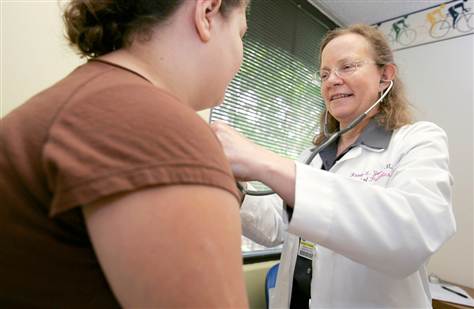
According to a study published online in Archives of Pediatrics & Adolescent Medicine, doctor should tell parents when their children are overweight as this would improve their motivation to follow healthy eating and activity.

Perrin and co-authors Asheley Cockrell Skinner, and Michael J. Steiner, performed a secondary statistical analysis of data collected from 4,985 children ages 2 to 15 years old who had a body mass index (BMI) at or above the 85th percentile based on measured height and weight. The data were collected as part of the National Health and Nutrition Examination Survey (NHANES) from 1999 to 2008.


During that time, only 22 percent of parents reported that a doctor or other health professional told them their child was overweight. This percentage increased from 19.4 percent in 1999 to 23.4 percent in 2004, and then to 29.1 percent in 2007-2008. Even among parents of very obese children, only 58 percent recall a doctor telling them.

However, as shown in the journal Pediatrics parents are reluctant to be told that their children have an unhealthy weight.

Focus on an "obesogenic" environment rather than kids behavior to battle obesity

According to researchers reviewing numerous anti-childhood obesity programs, the focus to prevent it should be on strategies that seek to change children’s environments rather than their behavior.
The researchers said that environmental approaches improving physical activity and dietary habits are the key to prevention measures.


To find which forms of intervention could have a maximum effect to help prevent obesity in children, an international team of researchers updated a previous Cochrane Review by searching for new evidence from existing studies to see which forms of intervention work best.

Researchers targeted children ages 6-12 with school-based programs that encourage healthy eating, physical activity, and positive attitudes to body image.

The researchers highlighted the key strategies that could be considered for prevention measures including healthy eating, physical activity and body image in school curricula.

The key findings are:

  • Increasing physical activity and the development of fundamental movement skills during the school week.
  • Improving the nutritional quality of food supplied in schools.
  • Creating environments and cultural practices within schools that support children eating healthier foods and being active throughout each day.
  • Professional development and capacity building activities which help to support teachers and other staff as they implement health promotion strategies and activities.
  • Giving more attention to parent support and home activities that encourage children to be more active, eat more nutritious foods and spend less time in screen-based activities.
Source: http://www.medicaldaily.com/news/20111207/8141/how-to-prevent-childhood-obesity-prevention-measures-for-child-obesitywatch-your-child%C3%A2%E2%82%AC%E2%84%A2s-dietch.htm

Thursday, 13 October 2011

Researchers Identify Pathways Leading to Activation of 'Good' Fat

Brown fat, burns energy rather than storing it, which the more common white fat does. The study, published in the October issue of Endocrinology, sought to learn more about how to get brown fat cells to grow. It identified two molecular pathways that lead to a protein called necdin that blocks brown fat growth.

With this information, researchers can look for ways to modify the steps along the pathways, either to stimulate another protein, called CREB, which shuts down necdin, or block a different protein called FoxO1, located along the second pathway, which stimulates necdin. The study showed for the first time that the two proteins can bind directly to the necdin gene.

One pathway to necdin starts with insulin cells and runs through proteins called Ras and ERK1/2 before getting to CREB. The second also starts with insulin and runs through proteins called P13-K and Akt before getting to FoxO1.

This is the latest in a series of studies on brown fat led by Drs. Cypess and Tseng. In July, Dr. Cypess and his team showed that brown fat can be seen on imaging studies in nearly half of all children and is most active in those who are thin. The amount of the fat also increases in children up until puberty, when it begins to decline, according to that study, published in the Journal of Pediatrics.

In 2009, Dr. Cypess and his team demonstrated in the New England Journal of Medicine for the first time that brown fat is metabolically active in adult humans. Previously, it had been thought that brown fat was present only in babies and children. The 2009 study showed it was found to be active under normal living conditions in 5.4 percent of all adults, with higher rates in women.

Source: http://www.sciencedaily.com/releases/2011/09/110921075423.htm

Wednesday, 20 April 2011

BMI may not be the right tool to measure health risks

The BMI is easy to measure, cheap to compile and track, and simple to convey to patients, but it was never meant to be a predictor of an individual's health risks. It was intended as a useful metric to track changes in the health and nutrition of large populations. For patients who are very muscular, and for African Americans, BMI is often a poor gauge of body composition. For Asians and people who are sedentary but slim, a reliance on BMI can lead a physician to overlook signs of elevated disease risk. A child's BMI, which is calculated differently than that of an adult, is also an imperfect predictor of illness or early death.


The BMI continues to dominate research on obesity and guide physicians' advice to patients. But some researchers have launched a rear-guard effort to knock the measure from its place atop the public-health pedestal. To replace — or at least supplement — the BMI, they are searching for measures that might offer individual patients a better gauge of their health risks, as well as a wider range of options to better their odds of staying healthy.

They'll also need tools to do so that are as cheap and simple as the BMI. Most techniques that measure body composition, including the Bod-Pod, the dual-energy X-ray absorption test (DEXA), and hydrostatic underwater weigh-in, are costly and time-consuming. Bioelectrical Impedance Analysis, an inexpensive and reliable gauge of body composition increasingly used in weight-management programs, may be practical in some general medical practices. But researchers are increasingly looking for ways to capture such information with tools as simple and inexpensive as tape measures.

One of the easiest alternatives to the BMI is waist measurement. With growing evidence that fat girdling the waist and visceral organs disturbs metabolism, the circumference of a patient's midsection has been shown to be a better predictor of Type 2 diabetes risk than the BMI.

Finally, an increasing number of researchers cite a major gap in the BMI: its inability to reflect the health effects of an individual's exercise habits. At least seven high-profile studies in the last decade have established that even for people with high BMIs, cardiovascular risk and the likelihood of early death are driven down significantly by maintaining a high level of fitness or at least regular physical activity. The risk of Type 2 diabetes also falls, although in that case, studies suggest that whittling waist circumference is a better strategy still.

Source: L.A. Times

Saturday, 26 March 2011

Post hosts summit on childhood obesity epidemic

Last week, Washington Post Live hosted a conference on the health crisis called “Weighing In on America’s Future: Childhood Obesity Summit.” Those in the auditorium and watching online heard how children have become so sedentary that they don’t even know how to jump rope, and how our “all you can eat” culture has led to an alarming rise in diabetes in children.

Celebrity TV chef Carla Hall proved you don’t need a lot of money to make tasty meals. Decked out in her chef’s apron, Hall cooked the lunchtime meal for $2.32 a plate — the amount the federal government spends on many lunches provided in school cafeterias. On that tight budget, she whipped up chicken pot pie, tossed salad and a poached pear topped with rosemary oat crumble.

Eating well affordably was also the message of Deputy Secretary of Agriculture Kathleen Merrigan. Her advice: Don’t get paralyzed in the grocery store aisles about which kind of apple or tomato to buy. Just buy fruits and vegetables (and wash them). A mom herself, Merrigan advised parents not to think in terms of “good foods and bad foods.” As she noted, “If I start making foods prohibited, then they become very attractive.”

Greg Jennings, the Green Bay Packers wide receiver who scored two touchdowns in this year’s Super Bowl, took the stage to congratulate local students who won a KidsPost contest that sought their ideas for curbing obesity. Read today’s KidsPost (on the back page of the Style section) to learn from the winners, including the 11-year-old who wrote that kids need to learn to prepare meals because “many parents grew up eating fast food so they may not even know how to cook.”

Jennings and other football players at the event urged children to join the “Fuel Up to Play 60” program, which urges children to exercise 60 minutes a day. He and just about everyone in the audience got into the spirit and exercised between panel discussions, loosening ties and kicking off high heels for jumping jacks and scissor kicks, all in the name of powering a movement to make Americans trimmer.

What follows are comments excerpted from hours of discussion of one of the most important health issues facing America today.

Source: The Washington Post

Obesity Problems Fuel Rapid Surge Of Type 2 Diabetes Among Children

Today, about 3,700 Americans under the age of 20 receive a diagnosis annually of what used to be called "adult-onset" diabetes, according to the Centers for Disease Control and Prevention. That relatively small number makes it a rare disease in children, but it represents a trend with larger ramifications.

"In a little more than 10 years, the numbers went from nothing to something," says Larry Deeb, a pediatric endocrinologist and past president of the medicine and science division of the American Diabetes Association. "And that's something to worry about."

Diabetes can cause a litany of medical woes, including heart disease, kidney failure, limb amputations and blindness. It costs the U.S. health-care system $174 billion a year, according to the National Institutes of Health.

Those statistics are grim enough when patients are in their 60s. When the diagnosis is made decades earlier, new fears are raised: Will these children suffer heart attacks in their 20s, need kidney dialysis in their 30s or go blind before they see their own children graduate from high school?

Because about 80 percent of Type 2 diabetes patients are overweight or obese, it's not surprising that patients such as Annie ask if they've done this to themselves. But there are other risk factors that no one can control: family history, ethnicity (blacks, Hispanics and American Indians have higher rates of diabetes), genetics or a mother who had diabetes during her pregnancy.

Instead of wallowing in regret, doctors suggest that young patients and their parents seize the opportunity for a crash course on how to improve their health.

"I used to wear a button that said 'Stamp Out Guilt,' " says Fran Cogen, director of the Child/Adolescent Diabetes Program at Children's National Medical Center in Washington, D.C. "I try to tell people that no one caused their diabetes. I emphasize that they can make changes now."

Alarm bells are going off among those who study diabetes in children because of what they know about the adult version of the illness. More than 25 million Americans have diabetes (more than 90 percent have Type 2), according to the National Institute of Diabetes and Digestive and Kidney Diseases -- but another 79 million have a condition called pre-diabetes, in which blood sugar levels are higher than normal but not as high as in diabetes.


Pre-diabetes isn't a disease requiring medical treatment -- it's a wake-up call. A large national study showed that adults with pre-diabetes who lost 7 percent of their body weight reduced their risk of diabetes by 58 percent.

Officials are concerned that the number of children already identified as having Type 2 diabetes is just the tip of the iceberg. In a national study of 2,000 eighth-grade students from communities at high risk for diabetes, more than half of the kids were overweight or obese. Only 1 percent had diabetes - but almost a third of them had pre-diabetes, according to Lori Laffel, chief of the Pediatric, Adolescent and Young Adult Section of the Joslin Diabetes Center in Boston and a principal investigator on the study.

It's crucial, she says, to find those children before their condition progresses to diabetes so that it can be reversed by lifestyle changes, without medication.

Making Progress


If there is any good news in childhood diabetes, it is that pediatricians are starting to look for it.

"It's in the news, and all over the medical literature," says Susan Conrad, a pediatric endocrinologist at Inova Fairfax Hospital. "Pediatricians are on top of it."


For example, sometimes children whose bodies are beginning to have problems regulating insulin develop a telltale dark, velvety rash around their necks. A decade ago, such a child might have been referred to a dermatologist.

In addition, CDC guidelines suggest that a child with a family history of diabetes, or one whose weight is above the 85th percentile for age and sex should be screened, with blood and urine tests, for diabetes.

Family experiences made John Perrone of Winchester, Va., aware of diabetes and its consequences. John's mother, who developed gestational diabetes during all three of her pregnancies, now has Type 2 diabetes. His mother's aunt had diabetes, and by the time she died in her 70s, she was on dialysis, in a wheelchair, legally blind and had suffered two strokes.

John got a diagnosis of Type 2 diabetes four years ago, and he has worked hard ever since to keep the disease under control. He says he's gone from an overweight 11-year-old to a husky but fit 15-year-old. He has progressed from needing insulin injections to keeping his glucose under control with oral medication, combined with healthful eating and a lot of exercise.

He has learned enough to want to teach other kids with the disease. As an Eagle Scout project, he has developed a PowerPoint presentation aimed at youngsters. He has translated medical terms, such as glucose and glucometer, into words they understand, such as sugar and meter. He has also wanted to simplify for kids the basics of weight loss, which is so crucial for diabetes control.

"It's all about in and out, what you eat, how much you exercise," he says. "Maybe if kids understand it better, they can do it."


Source: Kaiser Health News

Friday, 18 February 2011

Exercise helps overweight children think better, do better in math

Regular exercise improves the ability of overweight, previously inactive children to think, plan and even do math, Georgia Health Sciences University researchers report.

They hope the findings in 171 overweight 7- to 11-year-olds – all sedentary when the study started – gives educators the evidence they need to ensure that regular, vigorous physical activity is a part of every school day, said Dr. Catherine Davis, clinical health psychologist at GHSU’s Georgia Prevention Institute and corresponding author on the study in Health Psychology

To measure cognition, researchers used the Cognitive Assessment System and Woodcock-Johnson Tests of Achievement III that measure abilities such as planning and academic skills such as math and reading. A subset of the children received functional magnetic resonance imaging highlighting increased or decreased areas of brain activity.

MRIs showed those who exercised experienced increased brain activity in the prefrontal cortex – an area associated with complex thinking, decision making and correct social behavior – and decreased activity in an area of the brain that sits behind it. The shift forward appears consistent with more rapidly developing cognitive skills, Davis said.

And the more they exercised, the better the result. Intelligence scores increased an average 3.8 points in those exercising 40 minutes per day after school for three months with a smaller benefit in those exercising 20 minutes daily.

Activity in the part of their brain responsible for so-called executive function also increased in children who exercised. “In kids you just don’t know what impact you are going to have when you improve their ability to control their attention, to behave better in school, to make better choices,” Davis notes. “Maybe they will be more likely to stay in school and out of trouble.”

Cognitive improvements likely resulted from the brain stimulation that came from movement rather than resulting cardiovascular improvements, such as increased blood and oxygen supplies, Davis said. “You cannot move your body without your brain.”

The researchers hypothesize that such vigorous physical activity promotes development of brain systems that underlie cognition and behavior. Animal studies have shown that aerobic activity increases growth factors so the brain gets more blood vessels, more neurons and more connections between neurons. Studies in older adults have shown exercise benefits the brain and Davis’s study extends the science to children and their ability to learn in school.

Co-authors include Dr. Jennifer E. McDowell, neuroscientist, and Dr. Phillip Dr. Tomporowski, exercise and cognition expert, at the University of Georgia.

From: Georgia Health Science University News. http://news.georgiahealth.edu/archives/3263

Friday, 11 February 2011

Are dietary patterns in childhood associated with IQ at 8 years of age?

There is evidence that a poor diet associated with high fat, sugar and processed food content in early childhood may be associated with small reductions in IQ in later childhood, while a healthy diet, associated with high intakes of nutrient rich foods described at about the time of IQ assessment may be associated with small increases in IQ.

From: Northstone et al., Are dietary patterns in childhood associated with IQ at 8 years of age? A population-based cohort study. J Epidemiol Community Health doi:10.1136