Monday, 12 December 2011

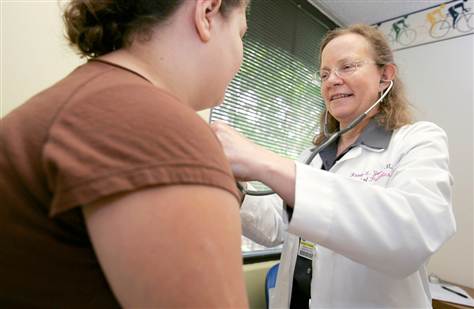
Doctors need to be honest with their patients and say ‘Your kid’s overweight’

According to a study published online in Archives of Pediatrics & Adolescent Medicine, doctor should tell parents when their children are overweight as this would improve their motivation to follow healthy eating and activity.

Perrin and co-authors Asheley Cockrell Skinner, and Michael J. Steiner, performed a secondary statistical analysis of data collected from 4,985 children ages 2 to 15 years old who had a body mass index (BMI) at or above the 85th percentile based on measured height and weight. The data were collected as part of the National Health and Nutrition Examination Survey (NHANES) from 1999 to 2008.


During that time, only 22 percent of parents reported that a doctor or other health professional told them their child was overweight. This percentage increased from 19.4 percent in 1999 to 23.4 percent in 2004, and then to 29.1 percent in 2007-2008. Even among parents of very obese children, only 58 percent recall a doctor telling them.

However, as shown in the journal Pediatrics parents are reluctant to be told that their children have an unhealthy weight.

Focus on an "obesogenic" environment rather than kids behavior to battle obesity

According to researchers reviewing numerous anti-childhood obesity programs, the focus to prevent it should be on strategies that seek to change children’s environments rather than their behavior.
The researchers said that environmental approaches improving physical activity and dietary habits are the key to prevention measures.


To find which forms of intervention could have a maximum effect to help prevent obesity in children, an international team of researchers updated a previous Cochrane Review by searching for new evidence from existing studies to see which forms of intervention work best.

Researchers targeted children ages 6-12 with school-based programs that encourage healthy eating, physical activity, and positive attitudes to body image.

The researchers highlighted the key strategies that could be considered for prevention measures including healthy eating, physical activity and body image in school curricula.

The key findings are:

  • Increasing physical activity and the development of fundamental movement skills during the school week.
  • Improving the nutritional quality of food supplied in schools.
  • Creating environments and cultural practices within schools that support children eating healthier foods and being active throughout each day.
  • Professional development and capacity building activities which help to support teachers and other staff as they implement health promotion strategies and activities.
  • Giving more attention to parent support and home activities that encourage children to be more active, eat more nutritious foods and spend less time in screen-based activities.
Source: http://www.medicaldaily.com/news/20111207/8141/how-to-prevent-childhood-obesity-prevention-measures-for-child-obesitywatch-your-child%C3%A2%E2%82%AC%E2%84%A2s-dietch.htm

Friday, 4 November 2011

Are diet and exercise enough to lose weight and keep it low?

A new study, published in The New England Journal of Medicine, shows that regaining weight after a period of diet and exercise may be inevitable due to hormones.

Australian researchers found that after losing weight, hormone levels - particularly those that influence hunger - shifted in the body, leading to increase appetites and weight regain.


The study involved 50 adults with a body mass index (BMI) between 27 and 40, who were on a diet and exercise for 10 weeks. After an initial loss scientists found that the levels of appetite-regulating hormones changed, resulting in a regain of 1/3 of the lost weight over the course of a year.

The results of the Australian study corroborate findings in another paper released earlier this year, in which researchers from Spain confirmed that people with high levels of the hormone leptin and low levels of ghrelin are more likely to gain the weight they lost.

Instead of playing the diet and exercise message on repeat - an ineffective longterm weight loss strategy for some - the Spanish authors suggested that endocrinologists and nutritionists consider the possibility of hormonal imbalances when developing weight loss strategies.

Source: http://www.nydailynews.com/life-style/health/diet-exercise-fight-obesity-study-article-1.971052#ixzz1cjDgPJ3S

Thursday, 20 October 2011

New drug to prevent pregnant obese women to give birth to obese babies

A UK trial will soon be under way whereby a commonly used diabetes pill will be administered to obese pregnant women in an attempt to prevent overweight mothers from delivering obese babies.

Obese women who become pregnant are generally at risk of complications such as pre-eclampsia (potentially fatal), fetal death, possible birth defects and a greater number of caesarean deliveries. Children born to obese mothers are twice as likely to be obese and to develop type 2 diabetes later in life. Obesity during pregnancy is also associated with greater use of health care services and a longer hospital stay.


Given the disturbing trend of increasing obesity among women in many developed countries, the answer is, apparently, to counter this by medicating babies while still in the womb. The trial will involve 100 obese but non-diabetic volunteers at hospitals in Liverpool and Coventry, England and Edinburgh, Scotland. Half will take the drug Metformin after the first trimester of their pregnancies and the other half will take a placebo.

Many weight loss groups and others feel that this news is most disturbing and gives the message that there is a solution to conditions such as obesity, which involve simply taking a pill as a "cure". The emphasis, they feel, should be on encouraging mothers-to-be to lose excess weight before even considering bringing a child into the world.

Studies have consistently shown that lifestyle modification that includes a healthy diet, regular exercise and weight management can prevent the many and various conditions associated with obesity, such as diabetes, gestational diabetes mellitus, and so on.

The ethics of medicating babies while in the womb, or the possible long-term effects of administering drugs of this nature, are also reasons for concern.

Source: http://www.telegraph.co.uk/health/h...
Wednesday, 19 October 2011

Caution bariatric surgery for adolescents

Weight-loss surgery for morbidly obese adolescents has become more popular even though many questions about safety and effectiveness remain, according to a commentary published in the New England Journal of Medicine.

Bariatric, surgery produces many benefits for most adult patients: they lose weight and can even have a complete reversal of diabetes. But less is known about the effects of the surgery on a young person who is just finished growing.

Several large and important studies are now underway to examine the risks and benefits of bariatric surgery on teens. Already, at least 1,000 teens a year are undergoing bariatric surgery in the USA despite the lack of long-term data on how the surgery affects them long-term. Until the data comes in from ongoing studies, doctors should tread cautiously in qualifying teens for surgery.

Source: http://www.latimes.com/health/boostershots/la-heb-bariatric-surgery-teens-20111012,0,4705997.story

Friday, 14 October 2011

Is there a link between air pollution and obesity?

Medical research has long supported the fact that exposure to ultrafine particulate matter increases the risk of various respiratory, cardiovascular, and pulmonary illnesses. Incidences of asthma, heart attacks, and chronic bronchitis are all higher in areas where the concentration of ultrafine particulate matter is higher. The correlation between particulate matter and these health issues is particularly pronounced in children, as well as low-income communities, which are often located closer to the sources of particulate matter (highways, factories, power plants) than their higher income neighbors.


Over the past decade, new studies have emerged that link air pollution to two of this country’s most pressing (and expensive) health epidemics: obesity and type II diabetes. Both are not only on the rise in terms of diagnoses, but also in terms of the costs associated with treatment. Even after controlling for factors such as genetics, income levels, weight, diet and exercise, Harvard researchers found a “consistent and significant” relationship between Type II diabetes prevalence and exposure to ultrafine particulate matter in a recent study published in Diabetes Care.

Results of an animal study published by Ohio State University researcher Qinghua Sun in late 2010 revealed that early exposure to ultrafine particulates led to the accumulation of abdominal fat and insulin resistance in mice even if they ate a normal diet. Exposure levels for animals in the study were similar to those found in U.S. cities.  The study compared mice fed a high-fat diet with those fed a normal, healthy diet, and exposed some members of both groups daily to ultrafine particulate matter, controlling for all other factors. In the end, all of the mice exposed to air pollution, including those fed a normal diet, had increased abdominal and subcutaneous (under the skin) fat.

These findings suggest that fine particulate pollution exposure alone, in the presence of a normal diet, may lead to an increase in fat cell size and number, and also have a proinflammatory effect.

Source: http://www.forbes.com/sites/amywestervelt/2011/10/10/two-new-reasons-to-worry-about-air-pollution-obesity-and-diabetes/

Thursday, 13 October 2011

Fat cell formation may be inhibited by blueberry polyphenols

The latest research has shown that blueberry polyphenols may inhibit fat cell formation and increase lipolysis at the molecular level, suggesting the potential of polyphenols in reducing obesity risk through the reduction of adipose tissue production in the body. Plant polyphenols have shown to inhibit adipogenesis and to increase lipolysis. This action of polyphenols shows the positive effect plant based food constituents have on reducing body fat and inhibiting obesity.

The study utilized pre-adipocyte tissue to identify the effects of blueberry polyphenols on differentiation of unspecialized cells into adipocytes, or fat cells. Compared to the control tissue that received no polyphenols, the tissue exposed polyphenols showed significant reduction in lipid content (27% - 73%).

The polyphenols in blueberries and antioxidants in other fruits are showing important promise in the treatment of obesity. Research has shown an association with obesity and a decrease in the activity of antioxidants in the body. Another preliminary study shows early indications that oxidative stress can potentially lead to an increased development of fatty tissue.

Source: http://www.lef.org/newsletter/2011/0412_Blueberries-Inhibit-Fat-Cell-Formation.htm?source=eNewsLetter2011Wk15-1&key=Article&l=0

Sleep deprivation may cause weight gain

A new European study published in the American Journal of Clinical Nutrition augments existing evidence that sleep deprivation can lead to weight gain, not only by increasing appetite, but also by slowing metabolism.

The research conducted in Uppsala University in Sweden found that as little as a single night's sleep deprivation can significantly lower energy expenditure in healthy men. This indicates that sleep plays a prominent role in determining daytime energy production. Previous research has revealed an association between sleep loss and weight gain and also has found that sleep disorders affect blood levels of stress and hunger hormones. In a quest to determine the exact means by which a lack of sleep affects weight, the team of investigators induced differing degrees of sleep conditions in 14 male college students. They divided the men into three groups, consisting of no sleep, normal sleep and limited sleep. The men were then assessed in regard to alterations in factors such as metabolic rate and amount of food consumed.

The energy outlay for activities such as breathing and digestion was lessened by 5 to 20 percent. Higher levels of appetite-regulating hormones and stress hormones were also noted. Even though the appetite hormones were affected, the men did not eat more during the day.

Although research data is inadequate to prove the link between sleep loss and weight gain, evidence is quite sufficient to suggest it. Data collected over the past 50 years reveals an inverse relationship between obesity rates and average sleep time, with the highest obesity percentages found in adults getting the least amount of sleep.

Source: http://www.reuters.com/article/2011/05/16/uk-health-sleep-idUSLNE74F02320110516
A Pablo Picasso painting donated to an Australian university was sold in June for £13.5 million at auction. The proceeds will benefit obesity, diabetes and cardiovascular research at the University of Sydney.

The work depicts his lover Marie-Thérèse Walter, whom he met in 1927 when she was 17 and he 45. The painting was snatched up by art collector Walter P. Chrysler Jr., son of the automobile tycoon, before being sold to the anonymous donor. Christie's puts its value at £9 million to £12 million (US$14 million to $18 million).


It is not clear why the donor picked the University of Sydney as the beneficiary for the Picasso, or why diabetes, obesity and heart research was chosen to benefit. In a statement, the university’s vice chancellor Michael Spence said the proceeds “will create multiple endowed chairs across several disciplines within a new multidisciplinary University centre dedicated to research into obesity, diabetes and cardiovascular disease”.

Source: http://blogs.nature.com/news/2011/06/a_picasso_fetches_135_million.html

Researchers Identify Pathways Leading to Activation of 'Good' Fat

Brown fat, burns energy rather than storing it, which the more common white fat does. The study, published in the October issue of Endocrinology, sought to learn more about how to get brown fat cells to grow. It identified two molecular pathways that lead to a protein called necdin that blocks brown fat growth.

With this information, researchers can look for ways to modify the steps along the pathways, either to stimulate another protein, called CREB, which shuts down necdin, or block a different protein called FoxO1, located along the second pathway, which stimulates necdin. The study showed for the first time that the two proteins can bind directly to the necdin gene.

One pathway to necdin starts with insulin cells and runs through proteins called Ras and ERK1/2 before getting to CREB. The second also starts with insulin and runs through proteins called P13-K and Akt before getting to FoxO1.

This is the latest in a series of studies on brown fat led by Drs. Cypess and Tseng. In July, Dr. Cypess and his team showed that brown fat can be seen on imaging studies in nearly half of all children and is most active in those who are thin. The amount of the fat also increases in children up until puberty, when it begins to decline, according to that study, published in the Journal of Pediatrics.

In 2009, Dr. Cypess and his team demonstrated in the New England Journal of Medicine for the first time that brown fat is metabolically active in adult humans. Previously, it had been thought that brown fat was present only in babies and children. The 2009 study showed it was found to be active under normal living conditions in 5.4 percent of all adults, with higher rates in women.

Source: http://www.sciencedaily.com/releases/2011/09/110921075423.htm